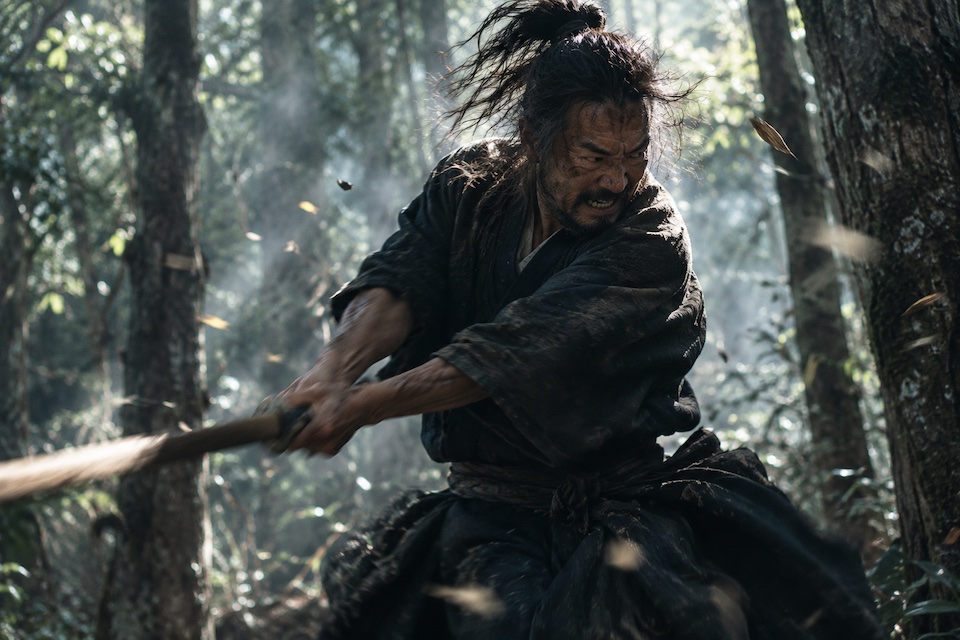
There is a particular kind of professional who reads The Book of Five Rings and immediately recognizes something they have been trying to articulate for years. Not because Musashi describes their industry or their market, but because he describes the internal conditions that make good decisions possible or impossible.
The book is about swordsmanship. It is also about something much harder to name: the quality of attention you bring to a contested situation, and what happens to your judgment when that quality degrades.
The Problem Musashi Was Solving
Musashi was not writing theory. He had survived more than 60 duels, many of them against opponents who were technically excellent. What he observed over decades of combat was that technical skill alone did not determine outcomes. Composure did. Perception did. The ability to see clearly in a moment of pressure, without the distortion of fear, ego, or habit, was what separated those who survived from those who did not.
He structured The Book of Five Rings around this insight. The Earth scroll establishes the foundation: the importance of understanding your field, committing to genuine mastery, and avoiding the trap of surface-level competence. The Water scroll addresses adaptability: how a skilled practitioner moves without fixed patterns, responding to each situation freshly rather than executing a memorized response. The Fire scroll deals with combat at full intensity: how to press advantages, how to read and disrupt an opponent’s rhythm, how to act when the situation is moving fast. The Wind scroll is about studying other schools and styles, understanding what competing approaches offer and where they fall short. And the Void scroll, the shortest and most demanding, points toward the goal of all this training: a state of mind that is empty of preconception, available to the full reality of the moment.
Adaptability as a Strategic Principle
The Water scroll is where many business readers find the clearest resonance. Musashi uses water as an image because water has no fixed form. It takes the shape of whatever contains it. In a narrow channel it moves quickly; in a wide basin it spreads and slows. It does not resist the shape of its environment. It responds to it.
This is the opposite of a strategy built around a single strength. Companies that win through rigid execution of a single formula tend to do well until the environment shifts. The leaders who navigate that shift successfully are those who can recognize when their current approach has become a liability rather than an asset, and who can adjust without losing their underlying purpose.
Musashi would not have phrased it that way, but the structure of his argument maps closely. He was deeply suspicious of attachment to style, to technique, to any fixed way of engaging with a problem. What he trusted was the quality of perception that makes adjustment possible in the first place.
Knowing Your Competitors Without Becoming Them
The Wind scroll addresses something that strategic consultants spend considerable time on: competitive analysis. Musashi argued that you cannot develop genuine strategy without understanding the schools you are competing against, their strengths, their limitations, and the assumptions they rest on.
But he was careful about how he framed this. Studying a competitor is not the same as imitating one. Many organizations, when they feel competitive pressure, respond by copying the leader in their category. They adopt the competitor’s structure, language, and methods. They become a slightly inferior version of the thing they are trying to beat.
Musashi’s point is that you need to understand another school thoroughly enough to see where it is vulnerable, where it is rigid, where it has made assumptions that you can move around. That requires genuine understanding, not surface imitation.
The Void and What It Has to Do With Decision-Making
The shortest scroll is the strangest, and the one that most rewards sitting with.
Musashi describes the Void as the source from which all strategy flows: a state of mind that is not cluttered by fixed ideas, reactive emotions, or the weight of past experience. He is not describing mysticism. He is describing what elite performers in any field describe when they talk about being fully present in a high-stakes moment.
When a decision-maker is genuinely in the Void, they are not running a mental checklist. They are not second-guessing themselves. They are not performing competence for an audience. They are responding to what is actually in front of them, with the full benefit of their training, without the interference of self-consciousness.
This is harder than it sounds, and Musashi knew it. The entire structure of The Book of Five Rings is a training program for arriving at this state. The preceding scrolls build the knowledge, the practice, and the composure that make the Void accessible rather than merely aspirational.
What This Book Will Not Do For You
It will not give you a five-step framework you can implement next quarter. Musashi would have found that kind of promise contemptible. The book is about cultivating a particular quality of mind over years of sustained practice, not about acquiring a technique you can apply immediately.
If you read it looking for clever tactics you can lift and repurpose, you will find a few, but you will miss the point. The point is the orientation it invites: toward honest perception, toward genuine mastery rather than performed expertise, toward meeting competitive pressure with presence rather than panic.
Those are not skills you acquire from a book. But a book can point you toward the practice. That is what Musashi was doing in those final weeks in his cave, writing in the dark, trying to pass on what 60 years of serious engagement with conflict had taught him.
Frequently Asked Questions (FAQ)
-
Why do modern business leaders read The Book of Five Rings?
-
Because the core questions it raises, about adaptability, competitive awareness, decision-making under pressure, and the nature of genuine mastery, remain relevant regardless of the specific context. The framework transfers even when the content does not.
-
How does a book about sword fighting apply to marketing or negotiation?
-
Musashi was not writing about swords in isolation. He was writing about the conditions that make clear thinking possible under pressure, and about how to understand and outmaneuver an opponent without losing your own footing. Those dynamics appear in many competitive contexts.
-
What does the Earth scroll teach?
-
The importance of foundation: understanding your field thoroughly, committing to genuine mastery, and not mistaking technical fluency for real competence.
-
How does the Water scroll apply to management?
-
It argues for adaptability over rigid style. Like water, effective strategy takes the form required by the situation rather than imposing a fixed structure on it.
-
How can the Fire scroll be used in competitive situations?
-
The Fire scroll addresses direct confrontation: how to press advantages, how to read and disrupt an opponent’s rhythm, and how to act decisively when the pace of events is high.
-
What does the Wind scroll teach about competitors?
-
That you need genuine understanding of competing approaches, not surface imitation. Knowing what other schools do well and where they are limited is essential to finding your own strategic position.
-
What does the Void scroll mean for mindset?
-
It describes a state of mind free from preconception and reactive emotion: the goal of all the preceding training. In practical terms, it is about the quality of presence that makes good judgment possible in high-stakes moments.
-
What is Musashi’s concept of emotional control?
-
He did not use the phrase “emotional control” directly, but he was deeply concerned with the distortions that fear, ego, and habit introduce into perception. His training system is designed to reduce those distortions through sustained practice.
-
Did Musashi value intuition or logic?
-
He valued perception that had been refined through practice until it operated without hesitation. That is not quite intuition in the popular sense, and not pure logic either. It is trained responsiveness.
-
Is his philosophy related to minimalism or productivity?
-
There are connections, particularly around the idea of removing what is unnecessary and concentrating on what is essential. But Musashi was not interested in efficiency as a goal in itself. He was interested in clarity and mastery.
Never Miss an Update
New articles and exclusive cultural insights are announced first on LinkedIn. If you want to keep expanding your understanding of Japanese philosophy and modern resilience, let’s stay in touch.
[Follow My LinkedIn Profile Here]
If this article brought a moment of peace or insight to your day, consider supporting my work.
Thank you.