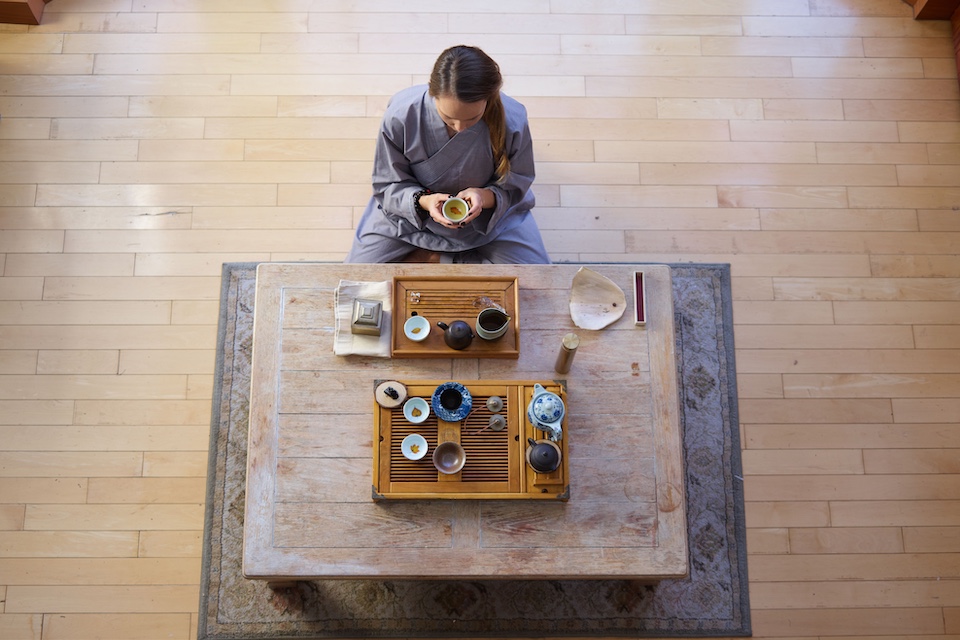
There is a phrase written on a scroll in many Japanese tea rooms: 一期一会 (ichigo ichie). It translates roughly as “one time, one meeting,” and it expresses an idea so simple and so profound that most people hear it, nod, and immediately forget to apply it.
The idea is this: every encounter is unique and will never happen again. Not in a vague, philosophical sense, but in an absolutely literal one. The combination of people, weather, mood, light, season, conversation, and a hundred other conditions that make up this particular moment has never existed before and will never exist again.
The question ichigo ichie poses is: are you actually here for it?
Origins in the Tea Ceremony
The phrase is attributed to Ii Naosuke, a 19th-century Japanese feudal lord and tea master, though the concept predates him and runs through the entire history of chado (the way of tea).
In the tea ceremony, ichigo ichie is not an abstract principle. It is a practical instruction for both the host and the guest. The host prepares the tea, selects the utensils, arranges the flowers, and chooses the scroll with the awareness that this particular gathering will never be repeated. Even if the same guests come again, the season will be different, the weather will be different, the host and guests will have changed.
The guest, in turn, brings full attention to the experience. They notice the scroll, the flower arrangement, the quality of the tea, the sound of water boiling, the feeling of the bowl in their hands. They do not check their phone. They do not think about what they will do after the ceremony. They are simply here, in this room, with this tea, with these people, in this moment.
This mutual attentiveness creates something that cannot be manufactured: genuine presence.
The Modern Problem of Half-Presence
We live in an age of chronic distraction. Even when we are physically present with other people, our attention is often elsewhere: on our phones, on our to-do lists, on the next thing we need to do.
The result is a life lived at half-volume. You eat meals without tasting them. You have conversations without listening. You watch sunsets while composing Instagram captions in your head. You are technically present for thousands of experiences but genuinely present for very few.
Ichigo ichie is a direct challenge to this mode of existence. It says: this moment, right now, is the only version of this moment you will ever get. If you miss it because you are mentally somewhere else, it is gone forever.
This is not a guilt trip. It is an invitation. The invitation says: you do not need to go anywhere or do anything special to have a meaningful experience. You just need to actually be here for the experience you are already having.
Impermanence as the Source of Value
Ichigo ichie is built on the Buddhist teaching of impermanence (mujo). Everything changes. Nothing lasts. Every moment is already passing as you experience it.
In Western culture, impermanence is usually experienced as a threat. Things are precious despite their impermanence. We value things and try to make them last, and we grieve when they end.
Japanese aesthetics, informed by Buddhism, take a different view. Things are precious because of their impermanence. The cherry blossoms are not beautiful in spite of falling. They are beautiful because they fall. A cherry tree that bloomed permanently would lose its power to move you. It is the brevity that creates the beauty.
Ichigo ichie applies this principle to human encounters. Your conversation with a friend is precious not because it will last forever but because it will not. The dinner with your family is meaningful not because there will always be another one but because, one day, there will not.
This awareness does not make life sad. It makes life vivid. When you truly understand that this moment is unrepeatable, you start paying attention to it with a quality of presence that transforms ordinary experience into something rich.
Beyond Special Occasions
The temptation is to apply ichigo ichie only to obviously significant moments: weddings, funerals, graduations, reunions. But the real power of the concept lies in applying it to ordinary life.
The morning walk to the train station. The lunch you eat at your desk. The five minutes you spend talking to the cashier at the convenience store. The quiet hour after dinner when nobody is talking. These moments are also unrepeatable. They are also worthy of your full attention.
In Zen practice, there is a saying: “Nothing special.” This does not mean that nothing matters. It means that the attempt to divide life into “special” moments and “ordinary” moments is a false distinction. Every moment is both ordinary and extraordinary. It depends entirely on the quality of attention you bring to it.
Practical Applications
Before a meeting or conversation, pause. Take one breath and remind yourself: this particular exchange will never happen again. This simple act of intention changes the quality of your attention.
Put the phone away. Not just silenced. Away. Out of sight. When you are with someone, be with someone. The notification can wait. This moment cannot.
Notice what you usually ignore. The taste of your morning coffee. The color of the sky at this particular hour. The specific way your partner laughs. These are details that you will not be able to recall in a year unless you pay attention to them now.
Do not rush endings. When a meal is over, do not immediately jump up to clear the dishes. When a conversation reaches a natural pause, do not rush to fill the silence or check your phone. Let the ending be part of the experience.
Accept that some moments will be mundane. Ichigo ichie does not mean that every moment must be transcendently beautiful. Some moments are boring. Some are uncomfortable. Some are painful. They are still unrepeatable, and they are still part of your one life.
Frequently Asked Questions (FAQ)
-
Is ichigo ichie related to mindfulness?
-
Yes.
Ichigo ichie and mindfulness share the same core emphasis on present-moment awareness. The difference is in framing. Mindfulness, as practiced in the West, often focuses on individual internal experience: observing your thoughts, feelings, and sensations. Ichigo ichie adds a relational dimension: it is specifically about the quality of attention you bring to encounters with other people and with the world around you. Both practices reinforce each other.
-
How is ichigo ichie different from “living in the moment” or YOLO?
-
“Living in the moment” and YOLO (you only live once) are often used to justify impulsive behavior: do whatever feels good right now because nothing matters in the long run. Ichigo ichie is the opposite of this. It is about paying deeper attention to the present moment precisely because it matters. It is not about recklessness. It is about reverence. The awareness that this moment is unrepeatable leads not to hedonism but to care.
-
Can I practice ichigo ichie if I am not interested in tea ceremony?
-
Absolutely. The tea ceremony is the historical context where the concept was most formally expressed, but the principle applies to all of life. Any time you bring full attention to an encounter, a meal, a conversation, or a walk, you are practicing ichigo ichie. You do not need a tea room, a kimono, or any equipment. You just need the willingness to be fully present with what is in front of you.
Never Miss an Update
New articles and exclusive cultural insights are announced first on LinkedIn. If you want to keep expanding your understanding of Japanese philosophy and modern resilience, let’s stay in touch.
[Follow My LinkedIn Profile Here]
If this article brought a moment of peace or insight to your day, consider supporting my work.
Thank you.