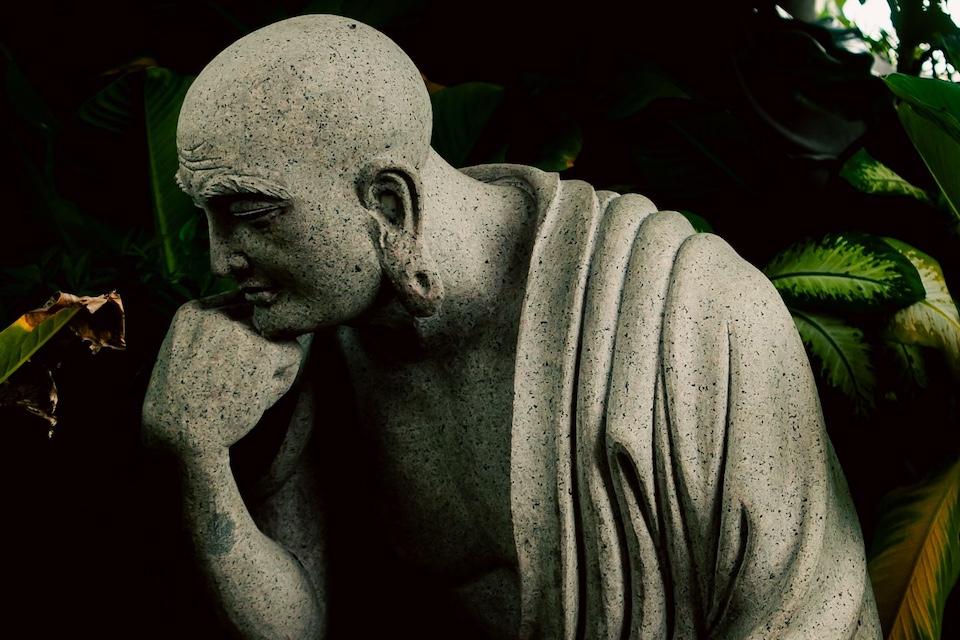
Marcus Aurelius and Dogen Zenji never met. They were separated by a thousand years, six thousand miles, and entirely different civilizations. Yet if you placed their writings side by side, you would find passages that seem to be in conversation with each other.
The Roman emperor writing in his tent during a military campaign and the Japanese monk writing in a mountain monastery arrived at strikingly similar conclusions about suffering, impermanence, self-discipline, and the art of living well. This convergence is not a coincidence. It suggests that some truths about the human condition are universal enough to be discovered independently, in radically different contexts.
The Overlap
The similarities between Stoicism and Zen are genuine and extensive. Here are the most striking ones.
Focus on what you can control. Epictetus taught that the key to inner peace is distinguishing between what is “up to us” (our opinions, desires, and actions) and what is not (everything else). Zen teaches something remarkably similar: attend to your own mind and actions, and release your grip on outcomes you cannot determine.
Acceptance of impermanence. Marcus Aurelius wrote constantly about the transient nature of all things, including fame, pleasure, and life itself. Zen Buddhism places impermanence (mujo) at the center of its worldview. Both traditions say: everything changes, and fighting that fact is a recipe for suffering.
Present-moment awareness. Both Stoicism and Zen emphasize being fully present. Marcus Aurelius wrote about not worrying about the past or future but attending to the task at hand. Zen meditation is, at its core, a practice of total presence.
Emotional equanimity. Both traditions aim for a state where external events do not dictate your internal state. The Stoics called this “apatheia” (freedom from destructive passions). Zen practitioners cultivate “fudoshin” (immovable mind). The language differs, but the goal is remarkably similar.
Simplicity and discipline. Both traditions value a life stripped of unnecessary complexity. Seneca warned against luxury. Zen monasteries practice radical simplicity in diet, dress, and daily routine. Both see excess as a distraction from what matters.
The Differences
The overlap is real, but so are the differences. And the differences are just as instructive.
The role of reason. Stoicism is fundamentally a philosophy of reason. The Stoics believed that the universe is governed by logos (rational order) and that human beings achieve their best life by aligning with that rationality. Thinking clearly is the primary tool. Zen, on the other hand, is deeply skeptical of conceptual thinking. The Zen tradition is full of stories of masters cutting through intellectual analysis with a shout, a slap, or a paradoxical statement (koan) designed to bypass rational thought entirely. Zen does not reject reason, but it does not trust it as the final authority.
Method of practice. Stoicism is primarily practiced through reading, reflection, journaling, and deliberate mental exercises. You read Marcus Aurelius, think about his ideas, and apply them to your life. Zen adds a physical, embodied dimension that Stoicism lacks. Zazen (sitting meditation) is not a thinking exercise. It is a practice of sitting with your body, observing your mind, and allowing insight to arise from direct experience rather than from intellectual analysis. This is a fundamental methodological difference.
The concept of self. Stoicism maintains a relatively conventional view of the self. There is a “you” who makes rational choices and exercises virtue. Zen’s teaching of no-self (anatta/muga) goes considerably further. The self that the Stoic is working to discipline is, from a Zen perspective, itself an illusion to be seen through. This creates a different relationship to practice. The Stoic strengthens the self through discipline. The Zen practitioner loosens the grip of the self through meditation.
Emotion and its value. The Stoics aimed to eliminate destructive passions (anger, fear, excessive grief) while cultivating positive ones (joy, goodwill). There is a clear hierarchy of emotions: some are good, some are bad, and the goal is to maximize the good. Zen is less interested in categorizing emotions as good or bad and more interested in observing them without attachment. The emotion arises, the emotion passes. The practice is not to eliminate certain feelings but to change your relationship to all of them.
Cosmology. Stoicism operates within a framework of divine providence. The Stoics believed the universe is intelligently designed and that everything happens for a reason. Zen makes no such claim. The universe just is. Things happen because of causes and conditions, not because of a cosmic plan. This difference in background assumptions does not always affect daily practice, but it shapes the overall flavor of each tradition.
What Each Can Teach the Other
If you are drawn to Stoicism, Zen has something valuable to add: the practice of meditation. Stoic journaling and mental exercises are powerful, but they remain in the domain of thinking. Zen meditation gives you access to a dimension of experience that thinking cannot reach. Adding a sitting practice to your Stoic routine will not contradict your Stoic principles. It will deepen them.
If you are drawn to Zen, Stoicism offers something equally valuable: a clear, systematic ethical framework. Zen can sometimes feel vague about how to handle specific ethical situations. The Stoic virtues (wisdom, courage, justice, temperance) provide a practical moral compass that complements Zen’s emphasis on direct experience.
Neither tradition needs the other to be complete. Both have produced profound practitioners working within their own systems alone. But for modern people who have access to both, combining their insights is a luxury that neither Marcus Aurelius nor Dogen could have imagined.
Not a Competition
I want to be clear about something: this article is not an argument that one tradition is better than the other. Both are genuine paths to a more examined, more grounded, and more meaningful life. The mountain metaphor in the title is deliberate. There may be many paths up the mountain, and the view from the top may look similar, but the experience of walking each path is distinct.
Choose the path that resonates with you. Or walk both. The mountain does not care which route you take. It only cares whether you actually walk.
Frequently Asked Questions (FAQ)
-
Can I practice both Stoicism and Zen at the same time?
-
Yes, and many people do. The two traditions are compatible in most practical respects. You can journal in the Stoic style, practice Stoic mental exercises, sit in Zen meditation, and study both traditions without contradiction. Where they differ (on the nature of the self, the role of reason, cosmological assumptions), the differences are philosophical rather than practical. You do not have to resolve every theoretical disagreement to benefit from both.
-
Which is better for dealing with anxiety: Stoicism or Zen?
-
Both can help, but through different mechanisms. Stoicism helps with anxiety by training you to think more clearly about what you can and cannot control, reducing the scope of your worry. Zen helps by training you to observe anxious thoughts without being captured by them, reducing their power over your emotional state. Some people find one approach more natural than the other. Experimenting with both is the best way to find what works for you.
-
Is the renewed interest in Stoicism related to the interest in Zen and Buddhism?
-
Likely yes. Both movements are part of a broader cultural turn toward ancient wisdom traditions as alternatives to modern consumerism, constant productivity, and the anxiety that accompanies both. People are looking for frameworks that have been tested over centuries rather than invented last year. Stoicism and Buddhism both offer that kind of depth, which is probably why they are both experiencing a resurgence at the same time.
Never Miss an Update
New articles and exclusive cultural insights are announced first on LinkedIn. If you want to keep expanding your understanding of Japanese philosophy and modern resilience, let’s stay in touch.
[Follow My LinkedIn Profile Here]
If this article brought a moment of peace or insight to your day, consider supporting my work.
Thank you.