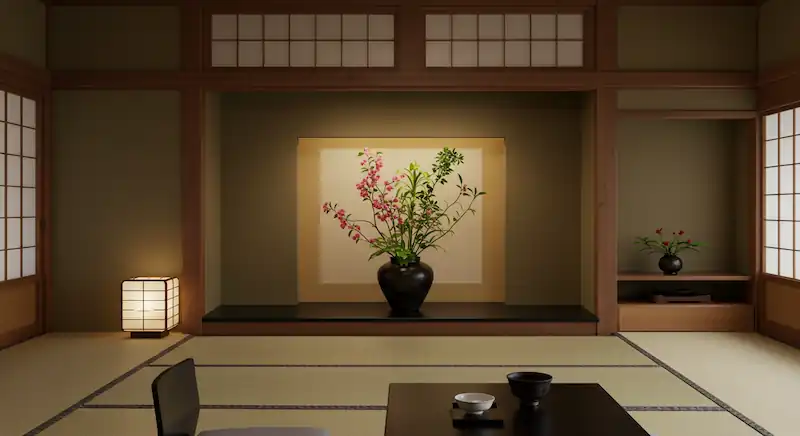
Search the word Zen today and the results arrive pre-sorted for you: a paint color, a meditation app, a brand of tea, a playlist of instrumental music for focus. None of it is a lie. None of it is what I sat down to do at nineteen, on the floor of a temple outside Kyoto, on boards cold enough to make my knees ache before the incense had burned halfway down.
I have practiced Zen for most of my life. I studied Buddhism and Zen in Kyoto in my twenties, and I now guide students who are younger than I was then. I am not writing this series to sell you a calmer mind. I am writing it because the thing that reached the West under the name “Zen” arrived with most of its weight removed, and I want to describe what was taken out.
What the West bought when it bought Zen
The version of Zen that sells well is a technique for feeling better. Sit for ten minutes, breathe, watch your thoughts, return to your day sharper and calmer. That is mindfulness, and modern mindfulness has a clear birth date: Jon Kabat-Zinn built the MBSR program at a Massachusetts medical school in 1979, with the Buddhist vocabulary stripped out so a hospital could use it. It worked. It helped people. It also taught two generations to expect a practice to pay.
That expectation is the whole problem. Once you sit in order to get something, calm, focus, an edge at the office, you have already turned the practice into a transaction. There is a name for the commercial end of this: McMindfulness, the wellness industry’s habit of selling inner quiet as a way to keep functioning inside the very conditions that wear you down. (That framing is Ronald Purser’s. I am borrowing it, not proving it.)
What Zen actually is
Zen is a school of Mahayana Buddhism. The word is the Japanese reading of the Chinese Chan, which comes in turn from the Sanskrit dhyāna, meditative absorption. It reached Japan from China and settled into two principal lineages, Rinzai and Sōtō.
At its center sits zazen(坐禅), seated meditation. In the Sōtō tradition the form is shikantaza(只管打坐), usually translated as “just sitting.” Not sitting in order to reach satori(悟り). Not sitting to calm down. Just sitting, with no object and no promised return. Dōgen, who carried this teaching to Japan in the thirteenth century, taught that the sitting is not practice toward awakening. The sitting is already the awakening. There is nothing waiting on the far side of it to collect.
This is the part that does not export. A practice with no product is very hard to put in a store.
Why a practice with no promise changed a civilization
This series keeps returning to one question: if Zen refuses to promise anything, why did it shape so much of Japan?
Because the refusal itself is a way of thinking, and ways of thinking move down into the hands. A people trained to sit without seeking learns to make without rushing, to leave a room deliberately unfinished, to treat a bowl of tea or a swept garden path as complete in itself. I felt the edge of this long before I could explain it, as a boy in a police-station dojo, made to draw the same cut ten thousand times toward no visible finish line. The repetition was not building toward a prize. The repetition was the thing.
Each part of this series takes one strand of that and follows it into ordinary life: how an idea born on the cushion changed how people saw, and how they made what they made.
The series
- The history of Zen.
How a teaching built on “just sitting” travelled from India through China to Japan, and why it is a religion and a discipline at the same time. - Zen and Shinto.
Why Japanese Zen is not pure Buddhism, and what it means for a people to hold two faiths in one pair of hands. This is the ground I know best, and where I will mark plainly where the scholarship ends and my own reading begins. - Zen and Japanese aesthetics.
Wabi-sabi(侘寂), ma(間), and the trained eye that finds the incomplete more beautiful than the finished. - Zen and the Way.
Tea, gardens, and the martial arts as shugyō(修行), endless training toward no completion. - Zen versus mindfulness.
The real difference between zazen and meditation, and what happens to a practice the moment you make it useful. - What the West gets wrong about Zen.
The misreadings, the ones worth correcting, and the few things the West got right.
What I am not promising you
I will not tell you that Zen will make you more productive, because it will not, and because wanting it to is the surest way to miss it. I will not tell you it will make you happy, or calm, or successful. I have sat for decades and I cannot draw you a straight line from the cushion to any outcome you could measure.
What I can say is narrower, and I think more honest. Something moves in a person who practices without asking for a return. I cannot tell you what it will move in you, or when, or whether you would even call the change an improvement. I only know that in my own life the change was real, and that it never once arrived on the days I demanded it.
I take great pride in this culture. I refuse to flatter it. Both of those are conditions of writing about it well, and both will be visible in the pages that follow.
So I will not ask you to believe anything. I will ask you to sit, once, for no reason at all. Then read on, and we can talk about what you found there, or did not.
If this article brought a moment of peace or insight to your day, consider supporting my work.
Thank you.