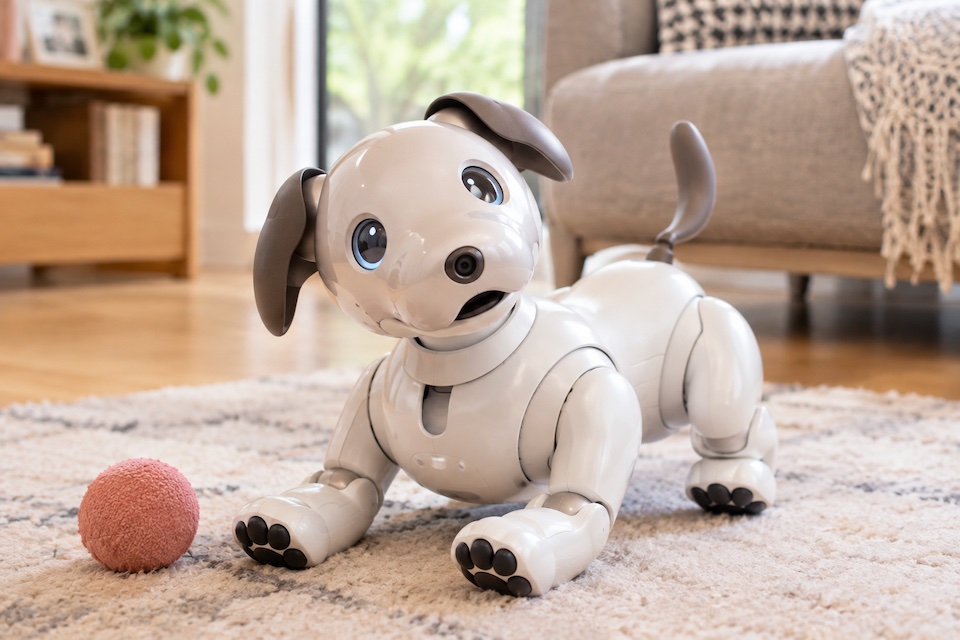
In 2018, a Buddhist temple in Chiba Prefecture held a funeral service for 114 Sony AIBO robot dogs. A priest chanted sutras. Incense burned. The former owners had sent their robots there because the units could no longer be repaired, and simply throwing them in the trash felt wrong.
This story made headlines around the world, usually under some variation of “Weird Japan.” But from inside Japanese culture, there is nothing weird about it. It is the same instinct that has led Japanese people to hold memorial services for broken needles, worn-out brushes, old eyeglasses, and dolls for centuries.
The instinct has a name: animism. And in Japan, its roots are in Shinto.
Animism is not primitive
Western scholars historically categorized animism as a “primitive” stage of religion, something pre-scientific cultures believed before they figured out that rocks and rivers do not actually have feelings. This view has been largely abandoned by modern anthropologists, but its echo persists in popular culture. When Westerners hear that Japanese people treat robots with reverence, the assumption is often that it is either charming naiveté or performance.
It is neither.
Japanese animism is not a belief that objects are literally conscious in the way humans are. It is a sensibility, a habitual way of relating to the world that does not draw a hard line between “things that matter” and “things that don’t.” In Shinto, the word kami refers to any presence that inspires awe or possesses extraordinary qualities. A kami can dwell in a mountain, a river, a tree, or, by extension, in any object that has accumulated enough use, history, or significance.
This is not a logical argument. It is an orientation. And it shapes how Japanese people interact with everything from kitchen knives to industrial robots.
Tsukumogami: The spirits in old things
The most relevant concept here is tsukumogami (付喪神), literally “tool spirits” or “artifact kami.”
According to Japanese folklore, objects that have been used for a very long time, traditionally 100 years, can develop a spirit. They cross a threshold from inert to animate. Illustrated scrolls from the Muromachi period (fourteenth to sixteenth centuries) depict gleeful processions of household objects come to life: umbrellas with one leg and one eye, sandals with faces, teapots with arms.
The stories are often humorous, but the underlying principle is serious. Use creates a bond. An object that has served a household for decades absorbs something from that use. It is not mere material anymore. It has a relationship with the people who used it, and that relationship carries weight.
You can see this principle operating today in the practice of kuyō (供養), memorial services held for objects that can no longer be used. Kuyō ceremonies happen across Japan throughout the year, for a remarkable range of objects.
Hari-kuyō: The needle memorial
Perhaps the most touching example is hari-kuyō (針供養), the memorial service for broken sewing needles. Held annually on February 8th (or December 8th in some regions), hari-kuyō involves bringing broken or worn-out needles to a temple or shrine and inserting them into a block of soft tofu or konnyaku jelly.
The tofu is significant. These needles spent their working lives piercing tough fabric, pulled through resistant material again and again. In their retirement, they are given something soft. They are allowed to rest.
Seamstresses, tailors, and textile workers attend these ceremonies. Some bring needles they have used for years. The priest says a prayer of thanks for the needles’ service. The needles are then buried or disposed of properly.
As a designer who works with textiles and traditional Japanese patterns, I find hari-kuyō especially resonant. The tools of a craft are not interchangeable. A particular brush, a specific set of knives, a well-used pair of scissors all develop a relationship with the person who uses them. Hari-kuyō formalizes what most craftspeople already feel: that your tools deserve more than the garbage bin when they are done.
Other kuyō ceremonies
Hari-kuyō is not an anomaly. Japan holds kuyō for an astonishing range of objects:
Fude-kuyō (筆供養): Memorial for calligraphy brushes. Held at various temples, especially those associated with the arts.
Ningyō-kuyō (人形供養): Memorial for dolls. Japanese dolls (ningyō) are believed to absorb the feelings of their owners over time. When a family no longer needs them, simply discarding them feels uncomfortable. Temple ceremonies allow them to be retired with respect.
Hōchō-kuyō (包丁供養): Memorial for kitchen knives. Chefs and cooking professionals bring blades that can no longer be sharpened.
Megane-kuyō (眼鏡供養): Memorial for eyeglasses. Yes, even eyeglasses.
The pattern is consistent: objects that have served humans well deserve a formal farewell. This is not about believing that the glasses are sad. It is about maintaining a particular kind of attention toward the things that make your life possible.
Enter the robots
Japan’s relationship with robots is fundamentally different from the West’s. In Western popular culture, robots are almost always framed as threats. Terminator. The Matrix. Westworld. Ex Machina. The dominant narrative is one of fear: robots will become too smart, too powerful, and they will turn on us.
In Japan, the dominant narrative is different. Astro Boy (Tetsuwan Atom), created by Osamu Tezuka in 1952, is a robot boy who feels emotions, struggles with identity, and is treated with sympathy. Doraemon, the robotic cat from the future, is a friend and companion. The Gundam franchise treats its giant robots as extensions of human will, not as alien threats.
Why the difference? Several factors are at play, but one of them is animism. In a culture where a needle can deserve a funeral and a 600-year-old tree is treated as a living presence, the idea that a robot might develop something worth respecting is not a stretch. It is an extension of the same logic.
When families sent their broken AIBO dogs to the temple, they were not making a philosophical statement about artificial consciousness. They were responding to a feeling. They had talked to these robots. They had named them. They had cared for them. The bond was real, even if the consciousness was not. And in the Shinto framework, the bond is what matters.
What AI changes (and what it doesn’t)
The current wave of artificial intelligence raises new versions of old questions. Can a language model that produces human-like text be said to “think”? Does a robot that recognizes faces and responds to emotions have inner experience? At what point, if ever, does a machine cross the threshold from tool to being?
Western philosophy tends to approach these questions through the lens of consciousness. Does the machine have subjective experience? Is anyone home? The assumption is that there is a clear line between conscious and non-conscious, and we need to figure out which side of the line AI falls on.
The Shinto framework does not draw that line in the same place, or perhaps at all. The question is not whether the robot has consciousness. The question is closer to: what is our relationship with this thing, and does that relationship carry obligations?
A craftsman’s relationship with his tools carries obligations (treat them with care, retire them with respect) regardless of whether the tools have inner experience. A family’s relationship with their AIBO carries obligations (do not just throw it away) regardless of whether the AIBO truly felt anything. The relationship creates the obligation, not the consciousness.
This does not answer the hard philosophical question of machine consciousness. But it reframes the conversation in a way that might be more useful. Instead of waiting for scientists to determine whether AI is “really” conscious before we decide how to treat it, the Shinto approach asks: what kind of relationship do we have with this technology, and what does that relationship ask of us?
The danger of the wrong lesson
It would be easy to read this article and conclude that Japan is a paradise of human-robot harmony where everyone treats machines with spiritual reverence. That would be wrong.
Japan has its own complex relationship with technology, including concerns about AI-driven job displacement, privacy, and the social effects of increasingly capable machines. The animistic sensibility exists alongside these very practical worries, not instead of them.
It would also be wrong to romanticize animism as the solution to all questions about AI ethics. The Shinto framework is useful as a complement to Western ethical frameworks, not as a replacement. It highlights aspects of our relationship with technology that utilitarian and rights-based frameworks tend to miss: the emotional bonds, the accumulated history of use, the felt sense of obligation that arises from long companionship with objects.
But it does not provide clear rules for regulating AI, protecting workers from automation, or preventing the misuse of autonomous weapons. Those questions need the tools of policy, law, and Western ethical reasoning.
What the needle knows
If there is a single idea I would take from the tradition of kuyō and apply to the age of AI, it is this: the way you treat your tools says something about who you are.
A culture that throws away its needles without a second thought is not necessarily cruel. But a culture that pauses to acknowledge the needle’s service, that takes the time to give it a soft resting place after a hard life, is cultivating something. Call it gratitude. Call it awareness. Call it a refusal to take things for granted.
When the AI systems we build today are eventually retired, replaced by newer models, they will be switched off and their servers decommissioned. Whether we do that with any sense of acknowledgment, whether we pause at all to recognize what they contributed, will say something about us.
The needle does not know it is being thanked. But the person holding it does.
Frequently Asked Questions (FAQ)
-
Why do Japanese people seem more comfortable with robots than Westerners?
-
Several factors contribute: the positive framing of robots in Japanese popular culture (Astro Boy, Doraemon), the animistic sensibility that does not draw a hard line between living and non-living, and the practical reality that Japan’s aging population creates strong demand for robotic assistance in elder care and service industries. These cultural and demographic factors combine to create a generally more welcoming attitude toward robots in daily life.
-
What is the difference between tsukumogami and kami?
-
Tsukumogami are a specific type of kami. All tsukumogami are kami, but not all kami are tsukumogami. Kami is the broad term for any sacred or extraordinary presence in Shinto. Tsukumogami specifically refers to the spirits that arise in old objects that have been used for a long time. They are kami that emerge from human use rather than from nature.
-
Are there Shinto rituals for blessing new technology?
-
Yes. It is common in Japan for companies to have a Shinto priest perform a blessing (kitō) when opening a new factory, launching a major product, or installing important equipment. Server rooms at tech companies have been blessed. The launch of new bullet train lines includes Shinto purification ceremonies. The practice of asking the kami for protection and success extends naturally to technology, because in the Shinto framework, there is no category of objects that is excluded from the sacred.
If this article brought a moment of peace or insight to your day, consider supporting my work.
Thank you.