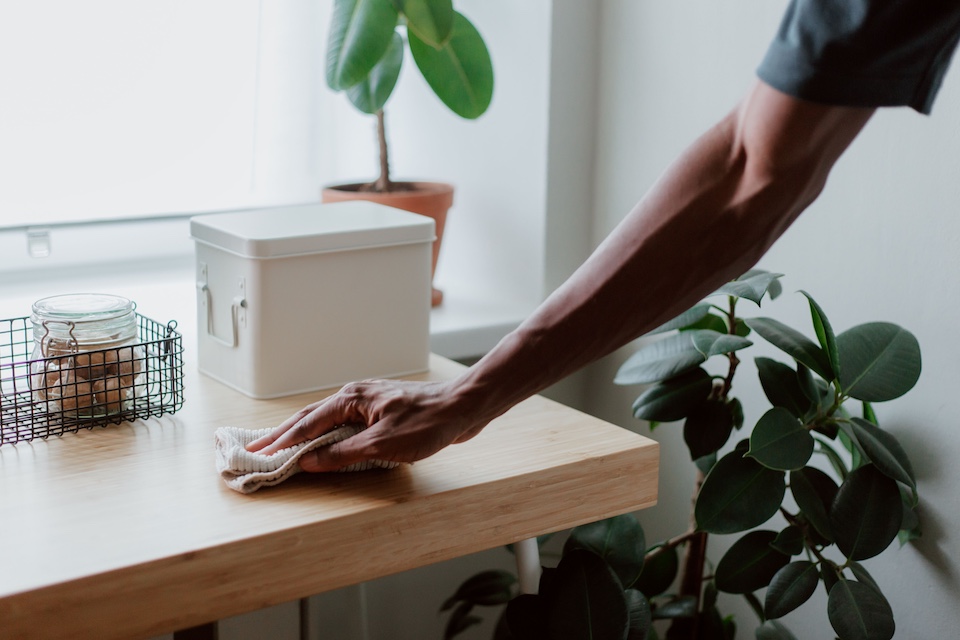
Kondo has not described her method as explicitly Shinto, but the cultural soil it grows from is unmistakable. Thanking objects before discarding them. Greeting your house when you come home. Treating possessions not as inert things but as entities that have served you and deserve acknowledgment. These are not quirks of one author’s personality. They are reflections of a worldview in which the boundary between “living” and “non-living” is drawn very differently from the Western one.
Tsukumogami: When objects come alive
Japanese folklore includes a category of beings called tsukumogami (付喪神), spirits that inhabit old household objects. A sandal worn for a hundred years might develop a face. A paper lantern might grow a tongue. An umbrella might sprout a single leg and hop around.
The oldest depictions of tsukumogami come from illustrated scrolls dating to the Muromachi period (roughly the fourteenth to sixteenth centuries). They show processions of animated household goods, marching through the streets at night. Brooms, pots, musical instruments, all walking around with expressions on their newly sprouted faces.
These images are playful, even comic. But the underlying idea is serious: objects that have been used for a long time absorb something. You might call it energy, spirit, or simply the accumulated weight of all the hands that have touched them. When an object has been part of human life for long enough, it crosses a threshold and becomes, in some sense, alive.
This is Shinto animism applied to the domestic sphere. If kami can dwell in a tree or a rock, why not in a knife you have used every day for thirty years? Why not in the broom that has swept your floor through seasons of change?
Kondo’s instruction to thank your possessions before letting them go makes complete sense within this framework. You are not talking to a piece of fabric. You are acknowledging the relationship. The sweater kept you warm. The book taught you something. Even if you no longer need them, the decent thing is to recognize what they gave.
Kegare: The concept Western “sin” cannot translate
To understand Shinto purification, you need to understand kegare (穢れ), and to understand kegare, you first need to set aside the idea of sin.
In Christianity, sin is a moral failure. You did something wrong. You broke a rule. You offended God. The remedy is repentance and, in some traditions, confession and absolution.
Kegare is not a moral concept. The word is often written with characters meaning “defilement” or “impurity,” but these translations carry too much moral weight. A more accurate rendering might be “spiritual depletion” or “a state of diminished vitality.”
The original Japanese etymology offers a clue. Some scholars read kegare as ke-gare (気枯れ), meaning “the withering of ki (vital energy).” You become kegare not because you did something bad, but because you have been exposed to things that drain life force: death, illness, blood, exhaustion, accumulated grime.
This is why contact with death creates kegare. It is why menstruation was traditionally associated with kegare (a topic I will address below). It is why even ordinary fatigue and daily stress can leave a person in a state that needs cleansing. The problem is not moral guilt. The problem is depletion. And the solution is not repentance. It is purification.
Harai and misogi: The two pillars of Shinto purification
Shinto offers two main forms of purification.
Harai (祓い) is the removal of kegare through ritual. When you visit a shrine for a formal prayer (kitō), the priest waves a wand of paper streamers (ōnusa) over you. That waving is harai. It is also what sumo wrestlers are doing when they throw salt into the ring before a match: cleansing the space. It is what you are doing when you sprinkle salt at your doorstep after attending a funeral.
Misogi (禊) is purification through water. In its full form, misogi involves standing under a cold waterfall while chanting prayers. The cold water shocks the body, the chanting focuses the mind, and the combination strips away accumulated kegare. You emerge feeling, quite literally, reset.
But misogi also has everyday forms. The temizu (手水) ritual at a shrine entrance, where you wash your hands and rinse your mouth with water from a stone basin, is a small misogi. The daily bath that Japanese people consider essential is, in a cultural sense, partly misogi. The act of washing is never just physical. It always carries an echo of spiritual cleansing.
I practice Zen, and the overlap between misogi and certain Zen practices (like cold-water training before dawn meditation) is not coincidental. Both traditions understand that the body and the mind are not separate systems. Clean the body, and the mind follows. This is not mysticism. Anyone who has taken a shower after a terrible day and felt the weight lift knows exactly what it means.
Why cleaning the house is a spiritual act
Every December, Japan undergoes ōsōji (大掃除), the “great cleaning.” Offices, homes, shops, and temples are scrubbed from floor to ceiling. It is the most thorough cleaning most spaces will receive all year.
Ōsōji is not just hygiene, though it certainly produces clean houses. It is harai applied to domestic space. You are sweeping away the accumulated kegare of the year. Dust, clutter, grime, and the intangible residue of stress, conflict, and fatigue are all removed so that the new year can begin with a fresh state.
This connects directly to Kondo’s method, even if she does not use the word kegare. The premise of the KonMari approach is that cluttered spaces create cluttered minds. That objects you no longer love or need weigh on you in ways you may not consciously register. That the act of sorting, deciding, and clearing is itself transformative.
In Shinto terms, clutter is a form of kegare. It is not morally wrong to have a messy closet. But the mess accumulates a kind of heaviness that affects how you feel in the space. Clearing it is not just organization. It is purification.
The taboo questions: death, blood, and kegare
This is the part of the article where honesty requires some discomfort.
Traditional Shinto associated certain states with kegare: contact with death, contact with blood (including menstruation), and certain illnesses. Women were historically excluded from some sacred spaces during menstruation, and people who had recently attended funerals were expected to undergo purification before entering a shrine.
From a modern perspective, and from a feminist perspective, this is problematic. Treating menstruation as a form of spiritual impurity sounds like discrimination, and in practice, it often was.
But the original concept of kegare is more nuanced than “impure equals bad.” If kegare is understood as a depletion of vital energy rather than a moral failing, then menstruation, childbirth, and even the grief that follows death can be understood as states of extraordinary energy expenditure. They are not shameful. They are exhausting. And the tradition’s response was not punishment but rest and renewal.
This does not excuse the real restrictions that were imposed on women, and many modern shrines have relaxed or abandoned these practices entirely. But it does help to understand that the original impulse was not misogyny (though misogyny certainly attached itself to the practice). It was a recognition that certain biological and emotional states leave a person depleted, and depletion deserves care, not condemnation.
Understanding this distinction matters because it reveals something about how Shinto approaches the human condition in general. There is no concept of original sin. Humans are not born fallen. They accumulate kegare through the ordinary process of living, and they restore themselves through purification. The cycle is natural. It is expected. Nobody is permanently stained.
Salt, water, and the daily rituals you did not know were Shinto
If you live in Japan or spend time here, you encounter Shinto purification practices constantly, often without recognizing them.
Salt at restaurants: Many traditional restaurants place small piles of salt (morijio) at their entrance. This is purification of the business space, inviting good fortune and clean energy.
Salt after funerals: Family members sprinkle salt on themselves before re-entering their home after a funeral. This is harai, separating the kegare of death from the space of daily life.
The morning bath or shower: While not explicitly religious, the Japanese emphasis on daily bathing carries an echo of misogi. You do not start the day carrying yesterday’s weight.
Cleaning the genkan (entryway): The genkan is the boundary between outside and inside, the domestic version of a torii gate. Keeping it clean is keeping the boundary between the public world and the private world well maintained.
These are not conscious religious acts for most Japanese people. They are habits. But habits carry culture, and this culture carries Shinto.
What Kondo is really teaching the world
Marie Kondo did not set out to introduce Shinto to Western living rooms. But that is partly what she has done.
The instruction to thank objects. The idea that a house should be greeted. The conviction that tidying is not just practical but transformative. The emphasis on touch, on physically holding each item and sensing whether it still belongs in your life. All of this rests on a foundation that is more Shinto than it is organizational science.
For Western readers who were surprised that Kondo talked to her socks, the surprise itself is revealing. It shows how deeply the Western assumption runs that objects are inert, that they are things we own and use and discard without ceremony.
Shinto offers a different assumption: that the world is full of presences, not all of them human, and that relating to those presences with awareness and gratitude is not silly or superstitious. It is a form of respect that, practiced daily, changes how you move through the world.
You do not have to believe that your socks have feelings. But the act of pausing, of acknowledging what an object has given you before you let it go, is the act of a person who pays attention. And paying attention, in Shinto and in life, is never wasted.
Frequently Asked Questions
-
Is kegare the same as the Western concept of sin?
-
No. Sin is a moral transgression, a violation of divine law that requires repentance. Kegare is a state of spiritual depletion that arises naturally through contact with death, illness, or simply the accumulated stress of daily life. It carries no moral judgment. Everyone accumulates kegare, and everyone can be purified. The cycle is as natural as getting dirty and taking a bath.
-
Why do sumo wrestlers throw salt before a match?
-
Salt (shio) is a purifying agent in Shinto. Sumo, which has deep roots in Shinto ritual, uses salt to purify the ring (dohyō) before each bout. The wrestlers are clearing the space of kegare so that the match takes place on clean ground. The sumo ring itself is considered a sacred space, and many elements of a sumo tournament, including the referee’s costume and the overhead canopy, reflect Shinto shrine architecture.
-
How is Shinto purification different from Christian baptism?
-
Both involve water and the idea of spiritual cleansing, but the underlying logic is different. Christian baptism is typically a one-time event that marks entry into the faith and the washing away of original sin. Shinto purification (misogi, harai) is ongoing and repeatable. You do not purify yourself once and become permanently clean. Kegare accumulates naturally, and purification is a regular practice, like bathing. There is no original sin to wash away, only the ordinary depletion of living.
If this article brought a moment of peace or insight to your day, consider supporting my work.
Thank you.