The City That Cleans Itself (Diarogue)
The Cultural Lens: Ep. 1 — What Japan’s Culture Shocks Reveal
Prologue
What Japan Does to You — If You Let It

Most people who visit Japan come back changed in ways they didn’t expect.
Not by the temples. Not by the food, extraordinary as it is. Not by the technology, or the fashion, or the ancient rituals performed in the shadow of bullet trains.
They come back changed by the smaller things. The moment they realized they’d been carrying their trash for six blocks without thinking about it. The silence of a packed subway car. A cashier’s bow over a 150-yen coffee that somehow felt more sincere than a conversation they’d had with a close friend that morning. A toilet that, against all reason, made them question the entire trajectory of Western civilization.
Japan gets under your skin not through spectacle, but through accumulation. Each small surprise lands quietly, and then another, and then another — until one day you realize you’re not just observing a different culture. You’re holding a mirror up to your own.
That’s what this series is about.
Culture Shock: An American’s Japan is a dialogue-based exploration of Japanese culture, told through the eyes of people encountering it for the first time. The conversations are real — or close enough to real that the distinction barely matters. The confusion is genuine. The moments of understanding are hard-won. Nothing has been simplified for comfort.
Each episode takes one moment of genuine surprise — the kind that stops you on a sidewalk, or stays with you on the train home — and follows it inward, past the surface behavior, past the cultural explanation, all the way down to the philosophy underneath.
Because Japan, more than almost anywhere else, has a philosophy underneath. Ancient, coherent, and quietly running through everything — the way a city cleans itself, the way a train runs, the way a craftsman holds a chisel, the way a woman at a ryokan notices your blister before you do.
The episodes can be read in order or entered anywhere. But they were written as a journey — each one deepening the one before it, each discovery preparing you for the next question.
Here is where we go.
Episode 1 — The City That Cleans Itself
There are almost no public trash cans in Japan.
There is almost no litter.
The question isn’t how.
The question is why — and what it reveals about a culture that placed its standards inside the individual, rather than outside.
Episode 2 — The Train That Shames Your Country
The Shinkansen’s average annual delay is forty seconds.
A packed subway car at rush hour is quieter than most libraries.
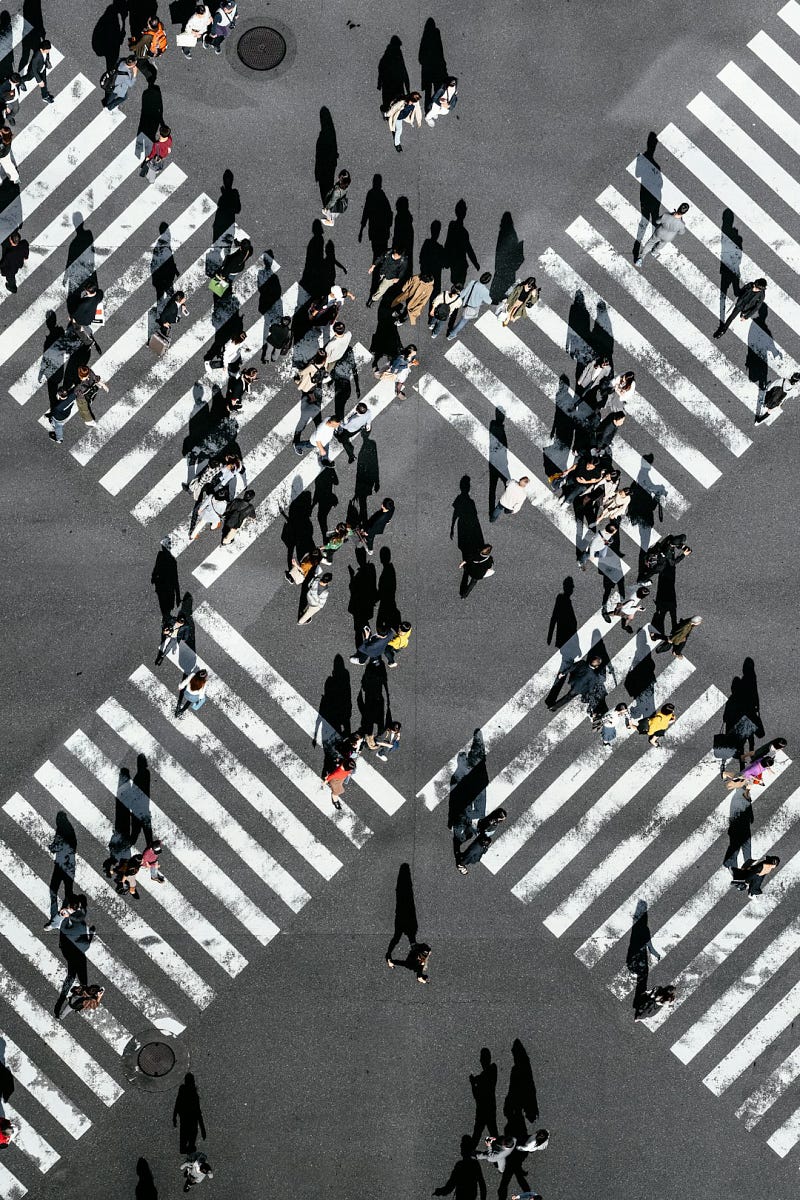
And at midnight, at an empty intersection with no cars in any direction, people wait for the green light.
Nobody is watching. That’s the point.
Episode 3 — The Bow That Means Everything
A slight inclination of the head over a canned coffee.
The silence before a Kendo match.
The reason Naoya Inoue walks into the ring without a single word of provocation — and why that says more about respect than anything a trash-talking fighter ever could.
Episode 4 — Lost in the Space Between Words
“We will consider it” means no.
“That’s difficult” means no.
“I see” means nothing, or everything, depending on how long the silence before it lasted.
Japan is a high-context culture — meaning lives in what isn’t said, and the most important message is often the one that was never spoken aloud.
Episode 5 — The Gift They Won’t Accept
Japan will go to extraordinary lengths to make you comfortable, anticipate your needs before you voice them, and serve you with a quality of attention that most cultures reserve for their most important guests.
And then it will refuse your tip.
Understanding why changes everything you thought you knew about what hospitality is for.
Episode 6 — The Konbini That Humbles Restaurants
The tuna mayo onigiri.
The egg salad sandwich where the filling goes all the way to the corners.
The seasonal chocolate éclair that is, inexplicably, better than the one you had in Paris.
Japan applies the full ethics of craftsmanship to a 150-yen triangle of cold rice — and in doing so, reveals something important about what “ordinary” is allowed to mean.
Episode 7 — The Toilet & Western Civilization
There is a deity in the Japanese toilet.
There is also a heated seat, a bidet function of startling precision, a sound system that plays running water to spare you embarrassment, and a lid that opens when you walk in.
These are not contradictions.
They are, it turns out, the same idea expressed in different centuries.
Episode 8 — The God in the Machine
The Shinkansen has run for sixty years without a single passenger fatality.
The miya-daiku — shrine carpenters — still build and restore sacred structures without nails, using joinery techniques that are over a thousand years old.
In most cultures, these two things would represent opposing philosophies.
In Japan, they are expressions of the same one.
These episodes were built from real conversations — the confusion, the resistance, the occasional genuine breakthrough of people encountering Japan with open eyes and Western assumptions.
The characters are composites. The questions are real. The discomfort is intentional.
Because the most valuable thing one culture can give another is not admiration.
It’s a question you didn’t know you needed to ask.
Let’s begin.
Episode 1: The City That Cleans Itself
Why Japan has no trash cans — and no litter
“So, let me flip this around,” I said, setting down my coffee. “What surprised you most when you first got to Japan?”
Nicholas didn’t even hesitate.
“The trash cans. Or, more precisely — the complete absence of them.”
He leaned forward like he’d been waiting years to say this.
“I’m walking around Osaka on my first day, jet-lagged, eating a convenience store onigiri — which, by the way, blew my mind, but that’s another conversation — and I’ve got this wrapper in my hand. And I’m walking. And walking. And walking. No trash can. Anywhere. I must have walked six blocks holding this thing like an idiot.”
Catherine laughed. “Oh my god, same. My first week I started keeping a little plastic bag in my backpack just for my own trash. I felt insane. But then I looked around and realized — nobody else had trash either. Like, where does it go?”
“That’s exactly the right question,” I said.
Takeshi: Let me give you some context. After the 1995 Sarin gas attack on the Tokyo subway, most public trash cans were removed across Japan. The authorities feared they could be used to hide explosives. And they never really came back.
Nicholas: Wait — that’s it? A security response? So this whole “Japan is amazingly clean” thing is just… an accident of history?
Takeshi: That’s the interesting part. No. The trash cans disappeared, but the litter didn’t appear. That’s what should surprise you.
Nicholas: (pausing) Huh. You’re right. That is the surprising part. In New York, you remove a trash can from a corner and within a week that corner looks like a landfill.
Catherine: So why doesn’t that happen here? What’s actually different?
Takeshi: Okay. Tell me — when you were in elementary school in America, who cleaned your classroom?
Nicholas: The janitor. Obviously.
Catherine: Same. I mean, we’d maybe pick up something if a teacher told us to, but… yeah, the custodial staff.
Takeshi: In Japan, there is no custodial staff. The students clean everything. Every day.
Nicholas: Every day?
Takeshi: Every day. From first grade. It’s called sōji — 掃除. After lunch, a bell rings, and the entire school stops. Students sweep the floors, wipe the windows, scrub the toilets. Teachers clean alongside them. It’s not punishment. It’s just part of the school day, as normal as math class.
Catherine: That’s… actually kind of beautiful? But also, scrubbing toilets at age six sounds rough.
Takeshi: (smiling) It’s not pleasant. But that’s partly the point.

Nicholas: Okay, I want to push back a little. Plenty of countries teach kids responsibility and discipline. Why does it actually stick in Japan in a way it doesn’t elsewhere? I’ve been to places where people are told to be clean and they still litter everywhere.
Takeshi: Because in Japan, it’s not about following a rule. It’s about who you are.
Nicholas: What does that mean, practically?
Takeshi: When a Japanese child cleans a toilet at school, they’re not thinking “I must obey this rule.” They’re internalizing a value: the space around me is my responsibility. The school is not the government’s property. It’s not the janitor’s problem. It belongs to the community — and I am part of that community.
Catherine: So it’s less about compliance and more about identity.
Takeshi: Exactly. In Japanese, there’s a concept called mottainai — 勿体ない. It roughly translates to “what a waste,” but it carries a moral weight. Wasting something — food, an object, a clean space — is almost a spiritual offense. You’re disrespecting the effort that went into creating it.
Nicholas: (quietly) Hm. So dropping a wrapper on the street isn’t just rude. It’s — what, a moral failure?
Takeshi: For most Japanese people, yes. Unconsciously, yes.

Catherine: I remember seeing that video — Japanese soccer fans cleaning up the stadium after the World Cup. Even after a loss. I cried a little, honestly. I didn’t really understand why at the time.
Takeshi: That moment went viral because it confused people. Westerners kept asking: “Why would they do that? There’s no reward. No one’s watching.” But that framing — no one’s watching — is itself the Western assumption.
Nicholas: Because in Japan, someone’s always watching?
Takeshi: Not someone. Yourself.
There’s a word — haji (恥). Shame. But it’s not shame in the Western sense of external humiliation. It’s an internal compass. You know when you’ve acted beneath your own standards. The trash in the stadium wasn’t the stadium’s problem. It was theirs. They brought it in. They take it out.
Nicholas: I’ll be honest with you — that makes me uncomfortable. Not because it’s wrong. Because it’s right, and it indicts a lot of how I was raised.
Catherine: Takeshi-san, can I ask something that might sound naive?
Takeshi: Of course.
Catherine: Is this cleanliness… actually connected to something spiritual? I practice mindfulness, and I’ve read about how Zen monasteries treat cleaning as a form of meditation. Is there a connection there, or am I romanticizing it?
Takeshi: That’s not naive at all. Yes — and no. Let me explain the difference.
In Zen, cleaning is called samu — 作務. Physical work as spiritual practice. When monks sweep a courtyard, they’re not trying to make the courtyard clean. They’re training the mind. The courtyard is just the object of their attention. The real practice is doing one thing, completely, with full presence.
Catherine: Oh wow. So the goal isn’t cleanliness. Cleanliness is the byproduct.
Takeshi: Exactly. Now — does every Japanese person sweeping a sidewalk think about Zen? No. Most don’t. But the cultural sediment is there. Centuries of Zen influence have shaped Japanese aesthetics at a level most Japanese people can’t articulate. They just feel, instinctively, that a clean space is a right space. A proper space.
Nicholas: Cultural sediment. I like that phrase. It’s like… the philosophy dissolved into the behavior so completely that you can’t see it anymore.
Takeshi: That’s a very good way to put it, Nicholas.

Nicholas: Okay, so where does this leave me as an American businessman living in Osaka? I mean, I’ve adapted — I carry my trash now, obviously. But I’m curious: do Japanese people judge foreigners who don’t know the unwritten rules? Or is there grace for outsiders?
Takeshi: (laughing) That’s a very practical question. Honestly — there’s grace. Japan has a concept, gaikokujin culture, where foreigners are expected not to know. But here’s what’s interesting: most foreigners who stay in Japan long enough adopt the behavior. Without anyone telling them to.
Nicholas: That happened to me. I started cleaning up without thinking about it. One day I realized I’d carried a coffee cup for four blocks to find a convenience store trash bin, and I didn’t even feel annoyed. I just… did it.
Catherine: That actually happened to me too. Around month two. It’s like the city trains you.
Takeshi: The city doesn’t train you. The social environment does. You look around and see that everyone treats the public space as theirs to protect. And something shifts. You start feeling that it’s yours to protect too.
Nicholas: Which brings us back to your original point — it’s not about rules. It’s about belonging.
Takeshi: Now you’re getting it.
Catherine: Takeshi-san, last question — do you think this is something the West could ever adopt? Or is it too deeply cultural?
Takeshi: Honest answer?
Catherine: Please.
Takeshi: The behavior can be adopted anywhere. Singapore proves that. But the spirit behind it — the sense that public space is a shared responsibility you carry personally, not something you outsource to authority — that requires a long cultural conversation. It requires questioning some very deep Western assumptions about individual freedom versus collective obligation.
Nicholas: The “it’s not my job” mentality.
Takeshi: Yes. In Japan, public space is everyone’s job, always. That’s not a law. It’s an ethic. And ethics take generations to build.
Nicholas: (sighing) Well. At least I’ve graduated to carrying my own trash. Baby steps.
The onigiri wrapper Nicholas had been too embarrassed to mention was still in his jacket pocket.
He threw it away at the Family Mart on his way home.
What to take away
Japan’s cleanliness isn’t a national personality quirk or a government program. It’s the surface expression of something much older and deeper: a philosophy that places collective responsibility ahead of individual inconvenience, and embeds that philosophy into children before they’re old enough to question it.
The trash cans are gone. The streets are clean.
The question isn’t how Japan does it.
The question is: what does it reveal about the assumptions your own culture never bothered to examine?
Next episode — Episode 2: The Train That Shames Your Country. Punctuality. Silence. Invisible order. Why do people follow rules no one enforces?
SHIBUMIWORKS PROJECT explores Japanese philosophy and spirituality through honest, unscripted conversation. Takeshi Kitagawa is a graphic and textile designer based in Osaka. Nicholas and Catherine are composite characters drawn from real conversations and real people.