On Beauty That Refuses to Be Defined
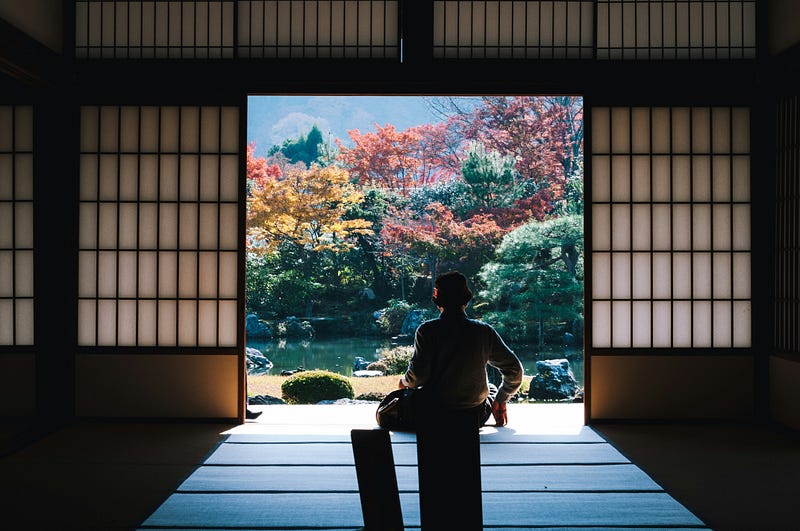
There is a certain kind of Japanese man, and I have been him, who after a few drinks will lean back and announce what the real way to drink is, the real way to carry yourself, or what a man’s aesthetic ought to be. In Japanese we say:
Kore ga otoko no bigaku to iu mon da (This is the aesthetics of a man)
The second the words leave his mouth, you already know that it is going to wrong. Whatever quiet thing he was gesturing at stops being true the instant he says it out loud. He would have been better off saying nothing and simply continuing to drink.
I think about this phenomena quite a bit because the opening line of the Tao Te Ching (道徳経) is about exactly this, and it has been mistranslated into self-help for so long that it has almost become meaningless.
道可道,非常道。名可名,非常名。
The way that can be spoken is not the eternal way. The name that can be named is not the eternal name.
Most readers stop at the first line and take it as a piece of mystical modesty, a poet clearing his throat before the real teaching. It is not modesty. It is a warning about what naming does. The second line is the one I want to sit with, because it is the one nobody quotes: the name that can be named is not the eternal name. The moment a thing is fixed in language, it is no longer the thing. It has become the word, and the word is smaller.
I came to Laozi (老子) young, through Zen and through the temples in Kyoto where I spent my twenties reading. But the line about names did not fully land for me there. It landed decades later, at a desk, as a graphic designer, with a piece of work in front of me that I could not stop touching.
The problem of the box
Consider what the West did with beauty. It built a discipline to hold it. Aesthetics, Baumgarten’s coinage, Aesthetica, from the 1750s, was an attempt to make a science of sensory experience, to give feeling a place in the architecture of knowledge. It was a serious and in many ways beautiful project. But look at what the project assumes: that the felt quality of a thing can be lifted out of the feeling, set down on a table, and named. That beauty will hold still long enough to be defined.
The strange part is what happened when Western art tried to honor the unfinished. There is a whole tradition of it. The Italians gave it a name, non-finito, the deliberately unfinished, the rough surface left rough. Michelangelo’s slaves twist half-free of the marble, one shoulder emerging, the legs still stone. It is genuinely moving. And yet notice: even the unfinished got a name. Even incompleteness was caught, labeled, filed, and hung on the wall with a placard. The box was large enough to contain its own opposite.
And Michelangelo himself believed the finished figure was already inside the stone before he began. His task, as he described it, was to remove everything that was not the figure, to release a form that pre-existed his chisel. The endpoint was known from the start. The unfinished sculpture is unfinished only because he stopped short of a destination that was always there, waiting in the marble.
Hold that thought, because it is where my own experience parts ways with his.
The hand that stops
I am a designer. Most days the work has a destination I can see, and I go toward it and arrive, and the thing is done. But there are other days. There is a point, working on certain pieces, where I lift my hand and think: if I touch this any more it will go wrong. Not because it has reached some standard I could name. I could not tell you what rule it satisfies. I only know that one more move would break it.
Is that piece finished or unfinished? Complete or incomplete? I do not know. I genuinely do not know, and I have stopped needing to. A composer must know the feeling: the bar after which the next note would be one note too many. A potter lifting a cup off the wheel a moment before the shape says more than it should. We call it “stopping,” but it is not stopping short of anything. There is no visible destination I am declining to reach.
Here is the thing I keep returning to. Michelangelo could measure his unfinished slave against the finished figure in the marble. The work was at eighty percent of a hundred he could see. But when my hand lifts, I have no hundred to measure against. In that moment the piece is at a hundred percent, because a hundred percent is simply here, now, the best available. There may be a hundred and twenty I cannot imagine. If there is, I will never know it, and naming my stopping-point “incomplete” would be a lie, because incompleteness implies a completion I can see. I cannot see one. The hand knew before the mind could name it.
That is the second line of the Tao Te Ching, lived at a desk. The judgment happened before language. The instant I could say this is finished, it would already be false, because saying so fixes a point that has no fixed location.
Beauty is not a discipline
So here is where I find myself, and I offer it as a doubt rather than a doctrine.
I do not think beauty can be a discipline. Not in the sense the West means, and not in the sense the Kyoto School meant either when it took Japanese sensibility and rebuilt it in the vocabulary of German philosophy. I want to be careful here, because these were profound thinkers and I am a designer with an opinion. But their move and Baumgarten’s move are, at the root, the same move: to take beauty, including the beauty of the incomplete, the ambiguous, the not-yet, and set it inside the box of definition, of -ology, of the systematized gaku (学), the “study of.” The instant beauty becomes a study, it holds still. And beauty that holds still is already the named name, not the eternal one.
There is a whole grammar of this in Japanese, hidden in the difference between the ending -gaku (学), the study of a thing, and the ending dō (道), the way of it. A -gaku stands outside its object and takes it apart to see how it works. A dō steps inside and does it. The science of physical movement is one thing; the martial way is another entirely, and no amount of the first will carry you into the second. You can know everything about how a body should move and still never enter the way of the sword. The two run parallel and never touch, because one is built to know its object and the other to live it. Aesthetics is a -gaku. It knows beauty. It is not clear to me that knowing beauty and being inside it are the same act, or even neighbors.
The culture I come from has a word for the reluctance to do this. Kotoage senu kuni (言挙げせぬ国), the land that does not raise words. It is how the Man’yōshū poet Kakinomoto no Hitomaro described this country twelve centuries ago: a place that does not declare, does not argue doctrine, does not lecture its own feelings into definition. Shintō has no catechism, no systematic theology, precisely because to state the thing is to lose it. You do not explain the mountain. You bow to it and go up in silence.
I have done that. At Ōmiwa Jinja (大神神社) mountain itself is the deity and you climb without speaking. Nobody defines what is present in the trees, the rocks, the turning of the path. If they did, it would evaporate. The whole practice is an agreement not to raise the word.
The way of beauty, which cannot be defined
And so, tentatively, half-seriously, I want to propose something. Not a study of beauty but a bidō (美道), a “way of beauty,” to sit alongside the other dō (道): the way of tea, the way of the sword, the way of the brush. A way, not a study. Something you walk, not something you define.
What would bidō hold as beautiful? The unfinished, the ambiguous, the not-yet, the same territory the aestheticians mapped. But bidō would refuse to draw the map. And here the sharpest reader has already caught me, so let me catch myself first: is a definition that refuses to define not still a definition? Are you not, in proposing bidō, raising exactly the word you say should not be raised?
Yes. Of course. And I have no clean escape, only the oldest company. Laozi wrote five thousand characters to say the way cannot be spoken. Hitomaro sang this is a land that does not raise words, and then, in the very next breath of the poem, raised his: and yet, and yet, I raise mine. The land does not declare, he says, declaring. The paradox is not a flaw in the argument I can polish out. It is the actual shape of the thing. To point at what cannot be named, you must use a name, and betray it in the pointing, and this betrayal is unavoidable and everyone honest has always known it.
The difference, the only difference I can defend, is knowing you are doing it. The man at the bar does not know. He thinks his words have captured his aesthetic, when they have killed it. Hitomaro knows. He raises the word anyway, for love, for the safe return of a friend, and he tells you plainly that he is breaking the country’s own reticence to do it. He keeps the paradox open instead of sealing it shut. That is the whole art.
How a thing like this shapes a person
I have wondered why this reluctance runs so deep here, and I think it does something to how people are built.
If you grow up in a culture that does not raise words around its deepest things, that will not define the sacred, will not systematize the beautiful, will not let a man announce his own aesthetic without something collapsing, then you learn to locate value somewhere below language. You learn to trust the hand that stops before the mind can say why. You come to feel that the most important judgments are the ones made in silence, in the body, in the gesture, and that dragging them up into speech does not clarify them but thins them out.
That is not always a virtue. It can curdle into evasion, into a refusal to ever say the plain thing that needs saying. I know that. But at its center is a real perception, one that Laozi carved into six characters and that I found again, without expecting to, at a desk with my hand hovering over a piece I could not name as finished: the moment you fix it in a word, you have already stepped away from it.
Let me end where I began, with the two men and their drink. The one who announces the aesthetics of a man is not wrong. He knows the form. He has simply never gone down into the part of it that cannot be said, and so he mistakes the name for the thing. The one who says nothing and drinks the way he drinks is not right, either, in any way he could defend. He only loves the deep part and does it, and could not tell you why if you asked. One knows. The other does the thing. Between knowing and doing runs the same line that runs between the study and the way, and it does not close.
Neither of them is wrong.
The bidō, if it is anywhere, is on the line between them.
Takeshi Kitagawa heads the SHIBUMIWORKS PROJECT, which aims to introduce Japanese culture. Rooted in his years of Kendo, Zen, and Shinto practice, the project explores whether these traditions have anything real to offer modern life―without pretending they have all the answers.
English is not my first language; I use AI as a linguistic tool to bridge that gap. The thinking is mine. The words are a collaboration.
コメントを残す